

Athletic Mentors teams pride themselves on professional appearance and conduct.
You might be a professional athlete without realizing it. One definition offered by the Merriam Webster dictionary defines the word professional as “characterized by or conforming to the technical or ethical standards of a profession”. Further, it defines a profession as “a principal calling, vocation, or employment”, another way of saying a profession is a job. Seriousness of conduct is at a higher level then what one would approach with a hobby. Though we don’t race for a living, everyone on a team benefits from professionalism. Here are a few ways to be “professional” and how it positively impacts yourself and the team.
Sharp Dressed (Wo)man
Nothing says “conforming to the technical” like a group that looks the same. More than matching jerseys and bibs, a truly professional look synchs socks, helmets, accessory equipment (glasses, gloves, shoe covers, bikes, etc.) and even cool weather wear. It’s imperative riders maintain a clean bike and kit. Team Athletic Mentors’ management puts a lot of attention and effort towards projecting a brand and we all have a role in that.
Take Pride in Your Team
A professionally run team establishes a vision and follows it. TAM has looked to develop riders. Some have gone on to higher ranks, even the ProTour. As a member of the team, you are part of that legacy. When other riders see you they see a team with high standards and a history of success. You have been chosen to continue an image, so take pride. This pride is not just racing or riding in your kit, but wearing the team casual wear during cycling and promotional events.
Team Mates and Sponsors First
Being professional means holding up your end of a bargain. Part of this is supporting the sponsors that provide resources to the team. Take every opportunity to promote sponsors’ products, keeping negative assessments within the team. Following through on your contractual agreements maintains the team’s ability to keep and hold sponsors. Think of your actions as reflecting those on your jersey and in your jersey.
Be an Ambassador
True professionals take responsibility to foster their livelihood. At our level, that means promoting the sport we love. Be approachable by strangers. Look to help more novice racers. Get in front of the camera. Most of us aren’t genetic freaks destine for greatness in cycling, but, rather, people passionate about a sport. Project that passion by supporting it any positive way so people see it means something to someone.
Make a Good First Impression 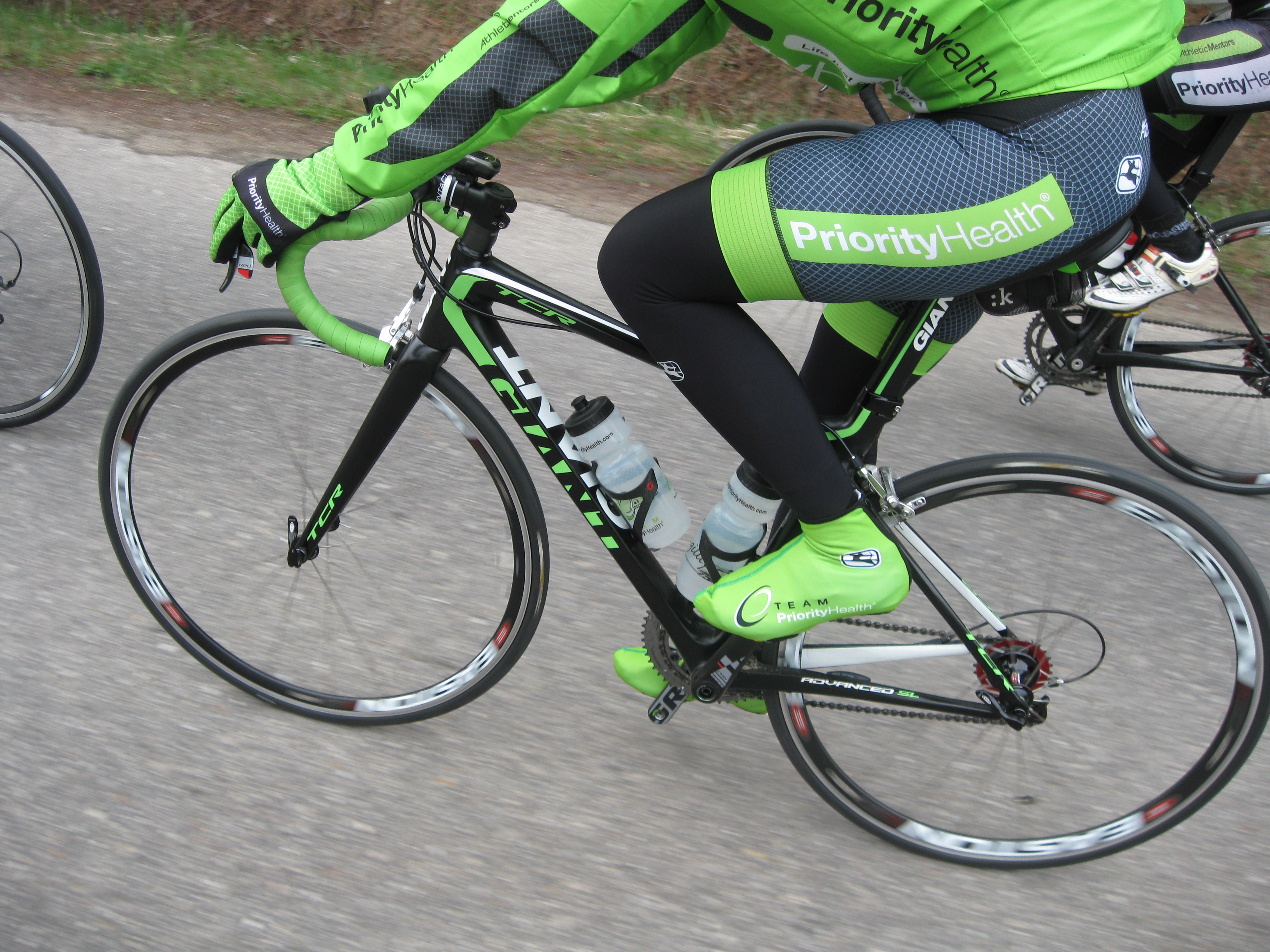
A professional conducts themselves at a high character level consistently. Sharp looking, organized teams get noticed, which makes the need to act your best even more important. Maintain an even keel during the heat of racing. Communicate with others through social media, in person, or other means, as if the spot light was always on. This includes when giving our opinion with race officials and promoters. Don’t forget having your attire leave no doubt who you race for while on the podium.
Add Value to Your Team
A well run team has a lot of moving pieces. Those pieces working in concert are what make an organization better than the sum of its parts. Try to look for ways to help, even if it’s just to offer your assistance. Most athletes have an expertise in some area(s), even if it’s just time, that can benefit everyone. Few good things happen by chance, but through effort by someone that cared.
Support Your Team Mates
One quality of a good team is people want to be a part of it. This usually isn’t the clothes they get, bikes they ride or deals offered. It comes down to feeling part of something where they are supported. Giving assistance, passing on knowledge, watching a fellow team mate and cheering them on are part of this support. It’s always best to feel we can share our triumphs and tragedies.
 From a training standpoint, coaches and self-coached athletes want the most objective power meter measurement possible. For several years, heart rate monitors were used but remained limited, especially for a short-term effort. Exercise labs possess stationary ergometers, but these aren’t usable for a casual group ride. In recent years, manufactures have stepped up their efforts to fill the expanding market of bicycle specific power meters; the following are different approaches complimented with their pros and cons.
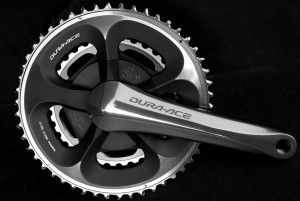 In the area of crank based meters, there are two choices: SRM and Quarq. The first is also the original; German Uli Schoberer released the first SRM in 1987. In developing this power meter, the strain gauges were placed in the spider arm section of a SRM specified crank. SRM is now using off the shelf high-end cranks, like Shimano’s popular Dura Ace, and engineering them to function as power meters. This allows a bike to keep the consistency of a component group (Dura Ace, Ultegra, etc.) and still measure output power in watts. Unfortunately, SRM does not have a user replaceable battery, therefore the unit must be sent back ever 1900 hours of use for replacement. SRM is testing a rechargeable battery that uses a USB port and needs attention after approximately 300 hours or use, but isn’t in production yet. The SRM can be paired with a 3rd party compatible ANT+ head unit, which allows for technology expansion. However, while most head units create an average by measuring one of the four data points every second, the SRM specific Power Control unit measures all four, then averages them for that second. Thus, for shorter measured durations such as a sprint, the Power Control unit provides more accuracy in power measuring. One common feature not on the Power Control unit is GPS. Additionally, SRM uses only the higher end cranks on the market, resulting in the highest prices, with a range from $2,400 to $4,000.
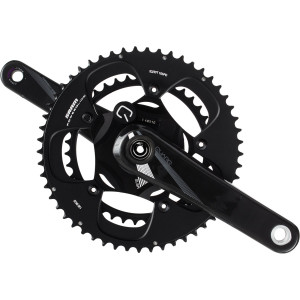 The second popular crank-based power meter is the SRAM owned Quarq. This company shipped their first units in mid 2008. Unlike SRM, who incorporates the strain gauges into the one-piece spider/arm of the crank, Quarq looked at the still popular market that had three-piece cranks (spider, left crank arm, right crank arm) and made a replaceable spider that had the necessary electronics. This brought the price down considerably and offered a user replaceable battery, making the product consumer friendly. Quarq offers models using Cannondale, Specialized, and SRAM cranks, and has two new models, the high end Elsa and more affordable Riken. Both have similar electronics, offer the same +/- 1.5% accuracy as other power meters, and no longer need to be recalibrated when chain rings are replaced. The Elsa has lighter crank construction and offers the ability to indirectly measure separate leg strengths. All units use the ANT+ sport licensing, and pricing runs roughly 30 to 40% less then SRMs.
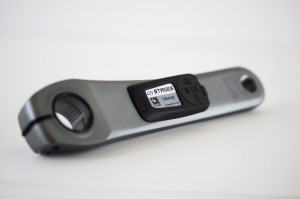 A new player on the market is Stages, who began selling their products in 2012. Like other makers, strain gauges are used. However, Stages’ gauges are located in a single, thin pod that is fastened to a brand specific left crank arm, requiring the replacement of the existing crank arm. The process is simple: replace the arm, pair the 20g meter with your head unit of choice, and that’s it. The system multiplies this single power reading by two to get your total power, making the assumption both legs are similar in strength. Stages states only about 5% of the riders have a significant difference. One drawback is that only metal crank arms are offered, which typically means Shimano. A full range of models exist (105, Ultegra, and Dura Ace), and are very reasonably priced at $600 to $900. These systems are ANT + compatible and have the new Bluetooth transmission. Accuracy is rated at +/- 2%, without factoring in any possible leg discrepancies.
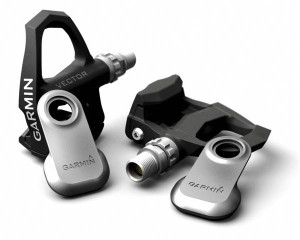 The newest player on the market is Garmin’s Vector pedal power meter. This technology was acquired from MetriGear, who showed prototypes at a few yearly conventions but couldn’t get the product to the market. Garmin ran into the same problem, but finally delivered this last year. Obviously, the greatest advantage is portability, as a wrench is all you need to move power-measuring capability from bike to bike. In addition, there is a wealth of knowledge with left and right real time readouts, as well as a total power value. The price is below most crank based units at about $1700, and sneaks in at about 45g more than a normal pedal system. However, the heart of the unit is a Look Keo pedal, so the user should find that mechanism to their liking. As a downfall, the system uses battery life considerably faster then other meters, needing a change every 175 hours. Each pedal requires its own battery, and crashes will likely see your expensive power meter grind across the pavement. Being a Garmin product, the system uses the ANT+ sport software for wireless transmission.
 Many adult athletes can trace their sporting start to a younger, simpler time when life’s responsibilities had yet to compete and consume their schedule. Dominican-born triathlete Raquel Tavares-Torres was one such promising young athlete whose athletic achievements would be sidelined in her prime by study, marriage, and raising a family. Sixteen years later, with great coaching and a supportive family, Tavares-Torres has become the ultimate comeback kid.
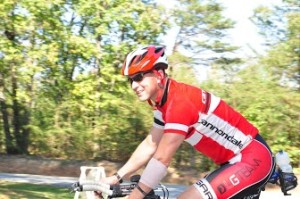 Most athletes will tell you the greatest gain from coaching is the guidance to do the right things, at the right time, in the right amounts. Even seasoned triathletes like Jay Lonsway can learn new tricks from a structured training plan. Lonsway called his quest to improve his 2012 Lake Placid Ironman time under the tutelage of coach Mark Olson “eye-opening.” But the proof was in his performance: this year, he shaved an hour off his 2012 performance.
 Athletic Mentors