
By: Mike Limerick
Around 2020, I started noticing pain in my right arm. It would run from my shoulder blade down into my hand. It came and went, so I didn’t think much of it at first. I figured it was posture, overuse, or something I could manage. So I did what most athletes do. I kept training. I stayed on top of my exercises, saw a chiropractor, and worked on my posture and strength.
In 2023, it got worse. I lost half my season and had to give up on my first full Ironman. That one stung. I had been building really well and felt strong. That was the first time someone told me the issue was coming from my neck. I went through about eight weeks of physical therapy, felt a little better, and got right back into training. But something had changed. I had lost strength in my right arm, and it never fully came back.
In 2024, things were going well again. I had some strong races, a great ride at the Grand Rapids Gran Fondo, and even hit a solid time trial on the bike. For about eight months, I felt like I was back on track. Then after racing the Grand Rapids Tri in mid June, I felt that same discomfort in my shoulder blade.
By mid July, the pain was back down my arm, and this time it did not go away. It was constant. Sleep was rough. I was tired all the time and had a hard time focusing. I was more short tempered than usual. I tried to keep most of it to myself, but it started to wear on me. Even asking my wife for help felt difficult. I am used to being active and independent. Every morning I woke up hoping it would be better. It never really was. By September, it flared up hard. At that point, I had enough. I went to see a spine specialist, and the imaging showed that my body had already started to fuse on its own.
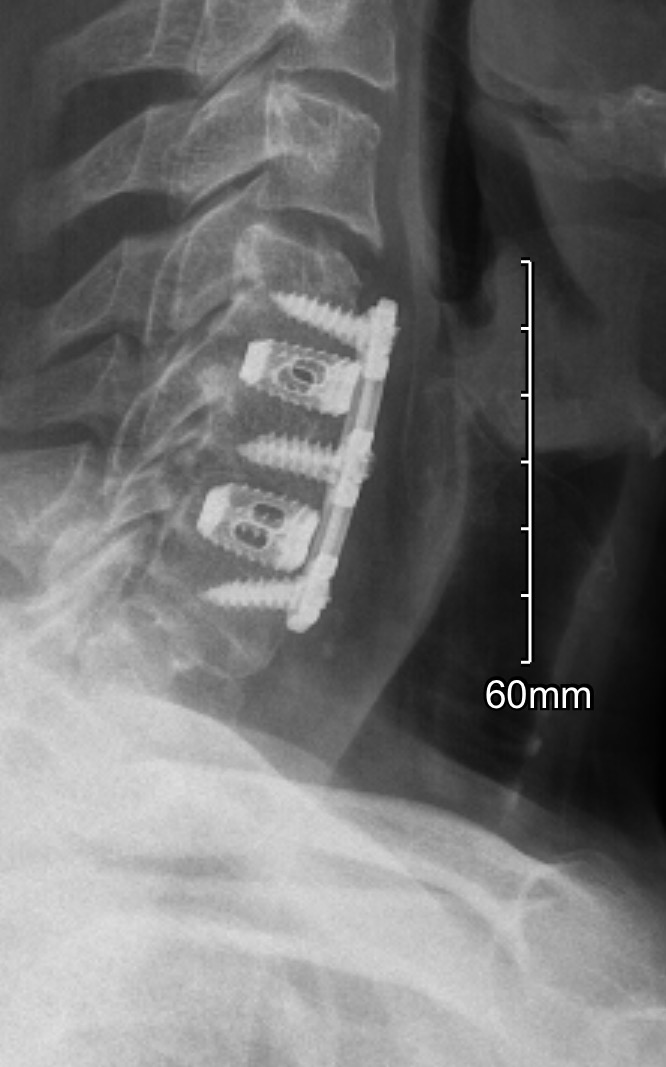
On November 5, 2024, I had my C4 through C6 fused. The first few weeks were humbling. Getting in and out of bed put a lot of stress on the front of my neck where the incision was. Avoiding quick movement took some effort. Asking help to lift objects over my head was annoying. However, I was surprised that I could get on the trainer and spin for about 15 minutes, but I had to sit upright and adjust my position.
A few weeks after surgery, we went on a family trip to Mexico. Even though I was in recovery, I knew the importance of staying active. I walked a lot, worked my lower body in the gym, and even swam short distances with a snorkel. For three months, I was restricted to lifting no more than five pounds with my upper body. Therabands became my go to. When I finally got back into the gym, it felt good, but it was also a reality check. I was lifting about half of what I had been the year before. Even the bike was still tough at that point. Being in an aero position requires some neck extension, and mine was limited. Push ups and pull ups were the hardest. Now I can do a few strict push ups and get a couple pull ups. I can even get a dip or two in. Overall, it has been a slow progress, but it is progress.
Team Athletic Mentors played a huge role in all of this. My coaches helped adjust my bike position so I could stay comfortable but still be effective. They helped guide my training without rushing the process. My teammates kept checking in and kept my spirits up. Without them, I do not think my season would have gone the way it did.
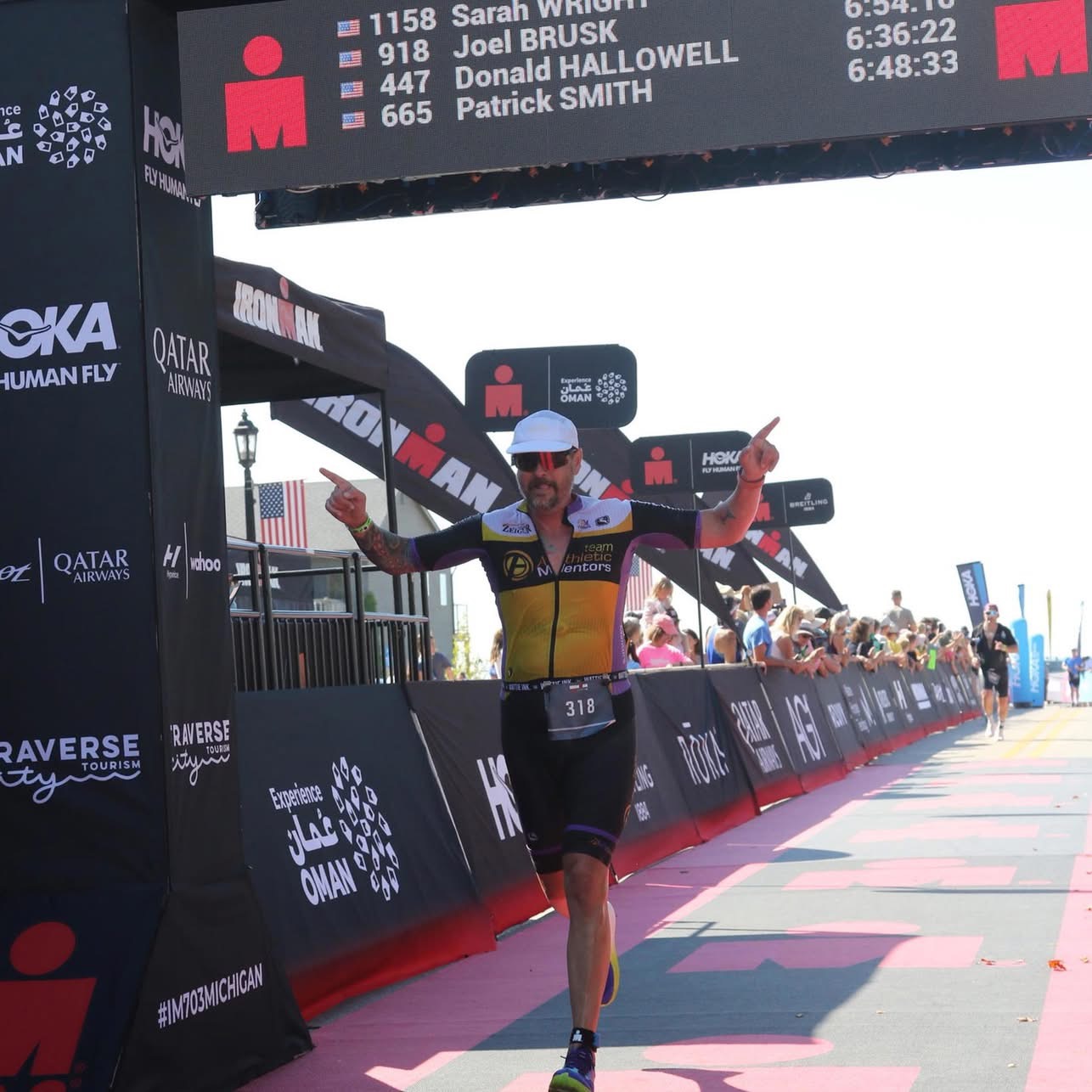 Race morning at Ironman Michigan 70.3 in 2025 tested me right away. I found a flat tire in transition and started to panic. I could not find a pump, so I ran to some friends to borrow one. When I realized the tire was leaking from the valve stem, I honestly thought my race was over. It felt like everything I had worked for was slipping away. I went over to the mechanics, and they were able to put tubes in just minutes before transition closed. My timing for fueling got thrown off because of all of it. I had taken a gel too early and ended up waiting about 45 minutes before the swim. Once I got in the water, though, everything settled. It was time to go. I stayed smart the whole race. Not chasing numbers. Just racing within myself. When I crossed the finish line, the feeling hit all at once. Relief, excitement, and a lot of emotion. Seeing my wife, my coach, and my teammates there waiting for me meant everything.
I had lost two seasons to this injury, and getting back to that moment was not easy. Trying to rebuild fitness while dealing with pain takes a lot out of you, both physically and mentally. What I took away from all of this is pretty simple. If something does not feel right and it sticks
around, go get it checked out. Do not assume it will fix itself. And when things get hard, because they will, you have to be willing to stay in it. Some days are going to hurt. Some days are going to feel off. But if you stick with it and have the right people around you, you can find your way back.
 Athletic Mentors